Waverly Ridge Estates Doesn't Have One Builder. Your Warranty Depends on Which One Built Your Lot
October 1, 2026
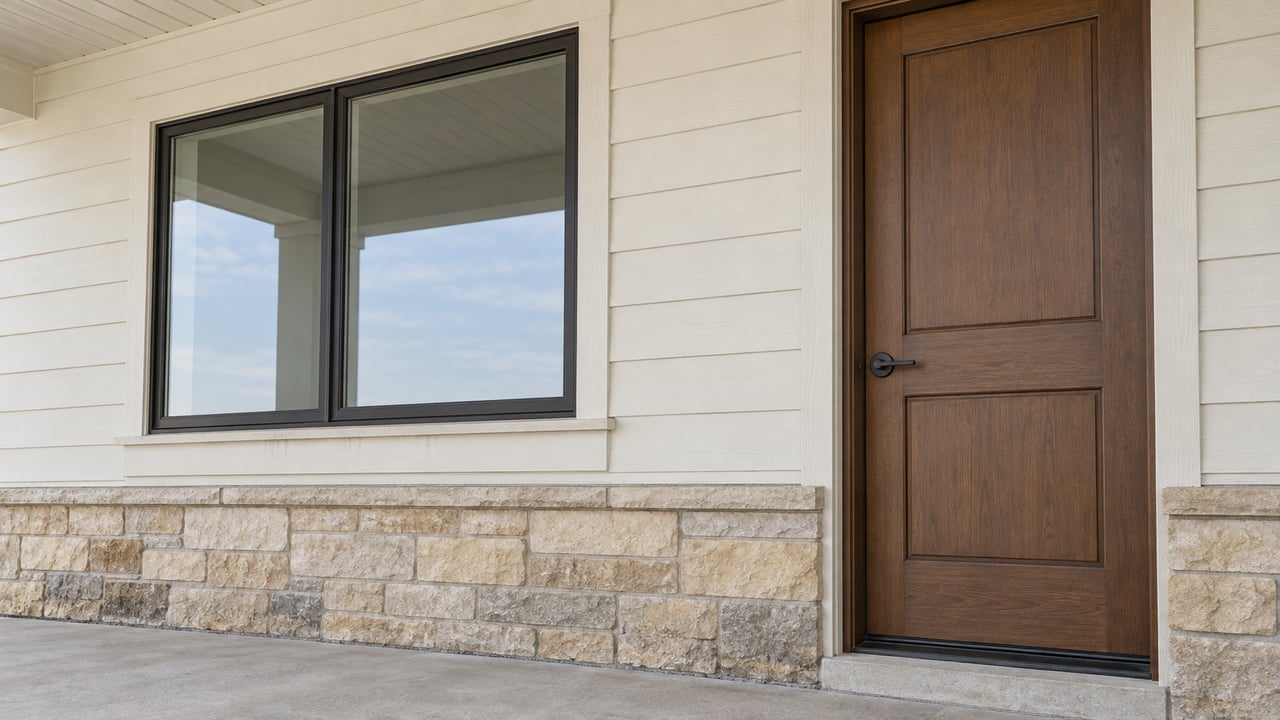
Drive the loop through Waverly Ridge Estates on a Saturday morning and the yard signs tell a story the subdivision's name does not. One driveway holds a Smetter Homes rider. Two lots down, a Newcastle Construction sign leans against a mailbox post. Further along, a Schneider Custom Home banner hangs outside a house still wrapped in house wrap, and a Derun Construction Inc. sign marks a finished ranch with a three-stall garage. None of these companies answer to each other. None of them are required to build to the same standard, use the same subcontractors, or offer the same warranty paperwork.
That is not an accident of timing. It is how the development is set up. Listings for the subdivision describe the lots as open to all builders, which means Waverly Ridge Estates was platted and sold as land, not as a single company's product line. A buyer choosing a lot here is not just choosing a neighborhood. They are choosing a builder, and that choice determines what happens if something goes wrong in year one, year two, or year nine.
Most new-construction guides treat "new" as a single category with a standard set of protections. That assumption holds up fine in a subdivision built entirely by one production builder, where every house on the street shares a warranty document and a construction standard. It holds up less well here, where four different companies are pouring foundations within a few hundred feet of each other under four different sets of terms.
In a single-builder community, a buyer can look at the house three doors down, ask the neighbor how their warranty claim went, and reasonably expect the same experience. In Waverly Ridge Estates, the neighbor's experience might tell you nothing about your own house, because a different company built it, under a different contract, possibly backed by a different third-party warranty provider.
The baseline that most builders in the subdivision advertise looks familiar: roughly a year of coverage on workmanship and materials, two years on major systems like HVAC, plumbing, and electrical, and ten years on structural elements. That is close to the general industry pattern the Federal Trade Commission describes for new-home warranties, where coverage on workmanship typically expires after the first year, systems coverage runs about two years, and some builders extend structural coverage out to a decade for major defects.
The word doing the real work in that sentence is "most." A shared baseline advertised across a subdivision's listings is not the same as a shared contract. Each builder in Waverly Ridge Estates writes its own warranty document, decides whether that warranty is self-backed or passed to a third-party insurer, and sets its own procedure for filing a claim. Two houses built the same year, thirty feet apart, can have meaningfully different answers to "who fixes this, and how fast."
| Warranty component | Typical industry baseline | What actually varies builder to builder |
|---|---|---|
| Workmanship and materials | About 1 year | Start date, what counts as a covered defect, and how a claim gets filed |
| Major systems (HVAC, plumbing, electrical) | About 2 years | Whether the builder self-insures or hands claims to a third-party warranty company |
| Structural | Up to 10 years | The insurer behind the coverage and the definition of a "major structural defect" |
None of this shows up on a yard sign. It shows up in the purchase contract and the warranty booklet handed over at closing, two documents worth reading in full before earnest money changes hands, not after a problem surfaces.
A certificate of occupancy gets treated, understandably, like a stamp of approval. It is issued by the local building authority once the inspections required by code are complete, and it means the house is legally safe to live in. It does not mean every finish is correct, every system performs the way it should, or every item on the plans got built the way it was drawn.
Consumer legal guidance on new-home defects puts it plainly: the certificate doesn't guarantee that everything is in working order or even complete. That gap between "legal to occupy" and "finished correctly" is exactly where new-construction disputes tend to start, and it is why a house passing its final city inspection is not the same claim as a house passing an independent one.
In a subdivision with one builder, the same company's standards apply across the development, so one house is a fair preview of the next. In a subdivision with four builders, the gap is a different size on every lot, and the only way to know how big it is on your specific lot is to have someone check who is not also the one who built it.
Most new-construction contracts include a closing walkthrough where the buyer and builder tour the finished house together and note anything still incomplete or incorrect. That list, usually called a punch list, becomes the builder's contractual obligation to complete. It is worth treating as more than a formality, because it is often the clearest documentation a buyer has of what the builder agreed to fix and by when.
A few things worth confirming before that walkthrough happens:
That last question matters more here than it would in a single-builder subdivision, because each builder's claims process is its own. Learning how it works before closing is considerably easier than learning it afterward.
Workmanship and materials coverage typically runs about a year from the date the certificate of occupancy is issued. Many of the defects that show up in a new house do not appear immediately. They appear after the house has cycled through a full set of seasons, which is why water seeping into a basement or around a window frame often surfaces for the first time in winter, well after the excitement of move-in day has faded.
That creates a narrow, easy-to-miss window. An inspection scheduled around the eleven-month mark, just before workmanship coverage lapses, catches issues while the builder is still contractually obligated to address them. An inspection skipped entirely, on the assumption that a brand-new house does not need one, routinely means those same issues surface in year two with no coverage left to invoke.
This is not a step tied to any one builder's reputation. It applies whether the house was built by Smetter Homes, Newcastle Construction, Schneider Custom Home, or Derun Construction Inc. The calendar reminder is on the buyer, not the builder, and the warranty clock does not pause for anyone who forgets to set it.
Does every builder in Waverly Ridge Estates offer the same warranty? No. Several builders are active in the subdivision, and each writes its own warranty terms. A shared baseline gets advertised, but the actual document a buyer signs depends on which company built that specific lot.
Is an independent inspection worth the cost on a brand-new house? An independent inspector has no stake in whether the builder's own work gets flagged, which is the entire point. A pre-closing inspection and a second inspection near the eleven-month mark are both worth scheduling in a subdivision where build quality is not standardized across the development.
What happens if a builder stops operating before the warranty period ends? It is worth asking directly, before signing, whether warranty coverage is backed by a named third-party insurer independent of the builder itself, since that coverage can survive even if the builder does not.
Buying new construction in a subdivision built by one company is a fairly predictable process. Buying new construction in Waverly Ridge Estates means the house next door is not necessarily a preview of your own, and the paperwork in front of you deserves the same scrutiny as the lot itself.
If you are comparing builders in Waverly Ridge Estates or trying to read a warranty document before you sign, Megan Woita can walk through what each builder's terms actually cover, informed by her own work on the construction side with Woita Homes. Contact Megan before your earnest money is due, not after your first winter in the house.
This article is general information, not legal, tax or financial advice. Consult a qualified professional about your situation.
Stay up to date on the latest real estate trends.

Whether you're buying, selling, renovating, or building a custom home, Megan Woita provides trusted guidance, unmatched expertise, and personalized service to help you achieve your real estate goals with confidence.
GET IN TOUCH WITH OUR TEAM TO LEARN MORE