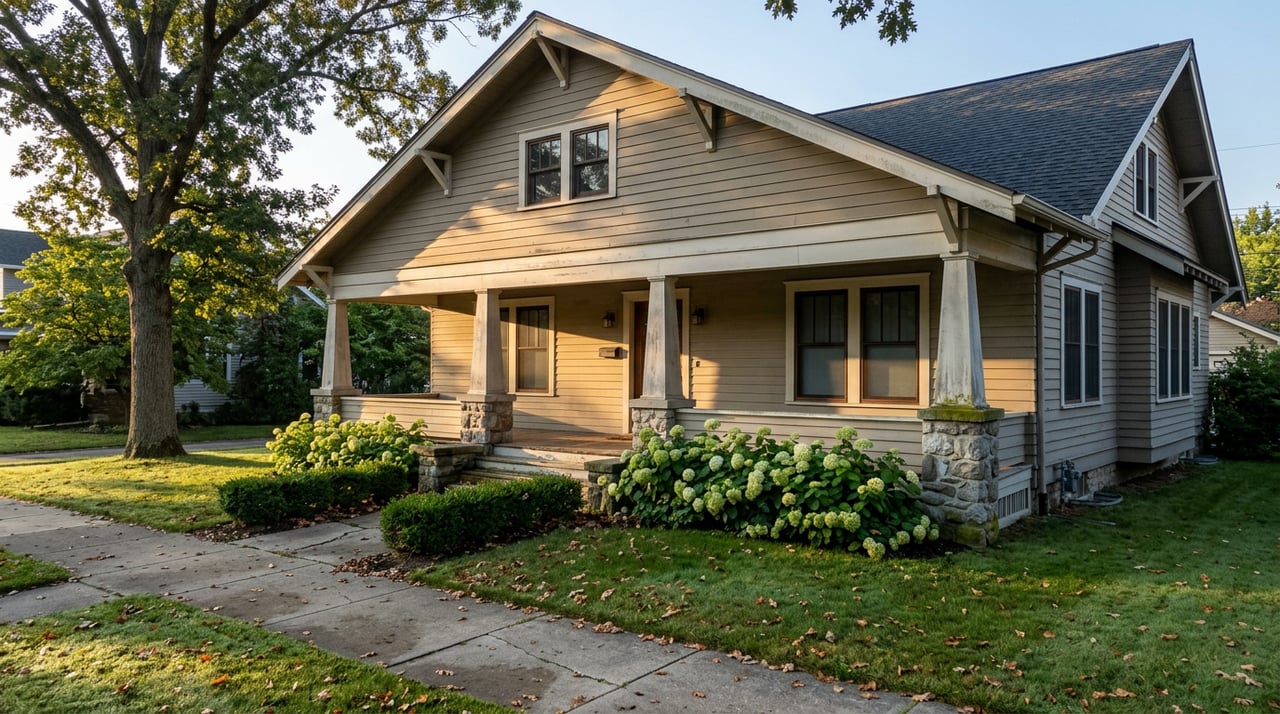
A Woods Park Bungalow Can Pass Inspection and Still Get Turned Down for Insurance
September 17, 2026
What actually stops a hundred-year-old Lincoln home from closing on schedule? Ask most buyers touring a bungalow in Woods Park or a foursquare in Hartley, and they will point to the same worry: the inspection. It is the visible hurdle, the checklist, the day everyone stands around a crawl space with a flashlight. But talk to anyone who has actually closed on a century home in one of Lincoln's older neighborhoods, and a different answer starts to surface. The inspection rarely kills these deals. The insurance binder does.
That distinction matters more than it sounds, because it changes when a buyer needs to start paying attention, and it changes what a seller needs to have ready before the first showing.
Homes in Woods Park's Historic Bungalow District went up mostly in the 1910s and 1920s, clustered near what is now the Lincoln Children's Zoo and Botanical Gardens. Hartley, one of the city's earliest suburbs, sits east of 27th Street and north of O Street, with houses built between 1890 and 1940. The Near South, one of Lincoln's other recognized historic neighborhoods, sits closer to downtown. Different pockets of the city, overlapping decades, and the same two findings turning up in inspection report after inspection report.
The first is foundation movement. Lincoln sits on clay-loam soil that expands and contracts with moisture, and the region gets enough annual precipitation to keep that cycle active. The pressure shows up as stair-step cracks in block walls, bowing, or a floor that has drifted out of level. This is not a defect unique to old houses. New construction across the city fights the same clay. A century home has simply had a hundred years of that pressure to leave a mark somewhere.
The second is the electrical system. Century homes in Lincoln commonly still carry some combination of knob-and-tube wiring, aluminum wiring, or a Federal Pacific or Zinsco panel, all installed under codes that predate current safety standards. None of that automatically means a home is unsafe to live in today. It does mean an inspector will flag it, and that flag travels further than the inspection report itself.
Foundation repairs in the Lincoln area follow a fairly predictable cost range depending on what the inspector finds:
| Repair type | Typical cost range |
|---|---|
| Concrete leveling | $1,500 to $4,000 |
| Bowing wall repair | $5,000 to $8,000 |
| Waterproofing | $6,000 to $10,000 |
| Piering | $9,000 to $12,000+ |
Those numbers give both sides of a transaction something concrete to negotiate around. A credit, a repair before closing, a price adjustment. The electrical finding does not resolve the same way, and that is where the real friction starts.
A cracked foundation wall is a negotiation. A Federal Pacific panel is often not.
Insurers increasingly treat certain panel brands and wiring types as categorical exclusions rather than case-by-case judgment calls. It does not matter whether the panel has ever tripped, sparked, or shown a single symptom of trouble. The brand name alone can be enough for an underwriter to decline coverage outright, attach an exclusion rider, or demand a licensed electrician's written report before binding a policy. Knob-and-tube wiring gets similar treatment from a lot of carriers, regardless of how it has performed for the past sixty years.
Here is the part that catches buyers off guard: this conversation usually does not happen during the inspection period. It happens afterward, once the buyer's lender requires proof of insurability before closing and the buyer calls an agent for the first time expecting a routine quote. If that agent comes back asking for an electrical report or quoting a higher premium with exclusions attached, what was a contract-week question is now a closing-week scramble, with a lender waiting on documentation nobody budgeted time for.
The foundation issue shows up early enough to negotiate before closing. The electrical issue can show up late enough to threaten the closing date itself, which is exactly why it deserves attention on the same timeline as the inspection, not after.
If a century home in Woods Park, Hartley, or the Near South has caught your eye, get an insurance quote request moving the same week you write an offer, not after your financing is already locked in. Ask directly what panel brand the home has and whether the wiring has ever been updated. A seller or a listing agent should be able to answer both questions without hesitation.
Budget for the possibility of an electrical upgrade the same way you would budget for a foundation repair. A written electrical inspection, the kind that documents panel type, wiring condition, and grounding, typically runs $150 to $400 from an independent inspector, and it can be the difference between a standard policy and a declined one. That report is also the piece of paper an underwriter actually wants to see, not a verbal assurance that the wiring has always been fine.
None of this should scare anyone away from an older home. It should change the order of operations. Inspection, then insurance quote, then closing, not inspection, then closing, then a surprised phone call from a lender three days before the keys change hands.
According to Foundation Repair of Lincoln, Nebraska's disclosure requirements put the burden on sellers to be upfront about known issues, and an unrepaired foundation problem left off a disclosure form can come back as a liability well after the sale closes. Left undisclosed and unaddressed, foundation issues can also measurably drag down what a home appraises for, in the range of ten to twenty percent by local contractor estimates.
If you are preparing to sell a century home, get ahead of both findings before the first showing. A foundation repair with paperwork and a warranty reads very differently to a buyer's inspector than a fresh crack with no history attached. The same logic applies to the panel. If your home still has a Federal Pacific or Zinsco panel, or any remaining knob-and-tube wiring, get a licensed electrician's documentation now, while you control the timeline. A buyer who sees that you have already answered the insurance question is a buyer who stops treating your listing as a project and starts treating it as a home they can actually close on.
Does every old home in these neighborhoods have knob-and-tube wiring? No. Many have been partially or fully rewired over the decades. The only way to know for a specific address is a licensed electrician's inspection, not an assumption based on the house's age.
Is foundation cracking a sign a Lincoln home was poorly built? Not usually. Clay-loam soil moves under new construction and century homes alike. What differs is how many decades of movement a given foundation has absorbed.
Can a seller fix the insurance problem before listing? In most cases, yes. A panel upgrade or a documented electrical inspection completed before listing removes the uncertainty from a buyer's insurance search, and the cost can be priced into the sale rather than negotiated after an offer is already on the table.
Which costs more to resolve, the foundation or the panel? It depends on the finding, but the panel is often the cheaper fix in dollars and the more disruptive one in timing, since it can surface late in the process when a lender is already waiting on proof of insurability.
If you are weighing whether a Lincoln bungalow or foursquare is worth the work, or you are getting one ready to sell, that is exactly the kind of conversation Megan Woita has with clients as they work through the process. Reach out, and let's walk through what your specific address is likely to show before it shows up as a surprise.
This article is general information, not legal, tax or financial advice. Consult a qualified professional about your situation.
Stay up to date on the latest real estate trends.

Whether you're buying, selling, renovating, or building a custom home, Megan Woita provides trusted guidance, unmatched expertise, and personalized service to help you achieve your real estate goals with confidence.
GET IN TOUCH WITH OUR TEAM TO LEARN MORE